
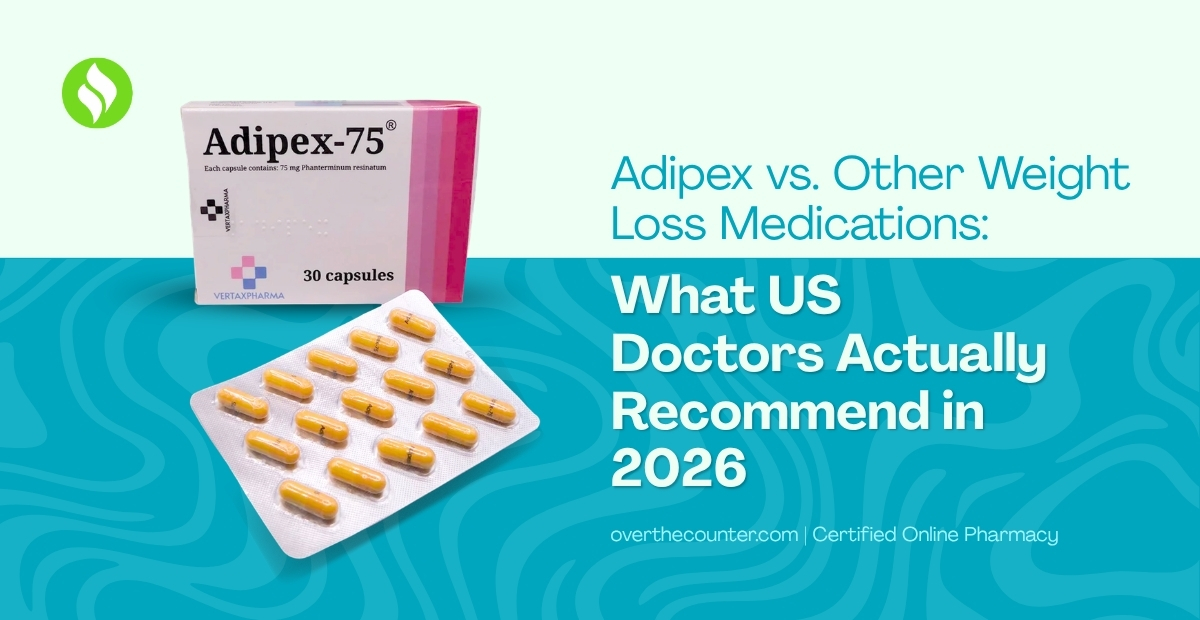
Adipex vs. Other Weight Loss Medications: What US Doctors Actually Recommend in 2026
The weight loss drug market in America looks completely different than it did three years ago. Ozempic is everywhere. Wegovy has a waitlist. Mounjaro is being prescribed off-label faster than anyone expected. And somewhere in all that noise, Adipex — one of the oldest prescription weight loss pills in the country — keeps getting prescribed to more people than most of the newer drugs combined.
If you're trying to figure out which medication makes sense for you — or why your doctor recommended one thing while your coworker was prescribed something else — the short answer is that these drugs don't work the same way, don't suit the same patients, and don't cost anywhere near the same amount.
Why Comparing These Drugs Is More Complicated Than It Looks
Weight loss medications don't all work the same way, and they don't suit the same patients. What gets prescribed depends on your BMI, other health conditions, what insurance covers, how much you can afford to spend monthly, and frankly, what's actually available in your area.
The drug categories in play right now are roughly these: older appetite suppressants like phentermine (Adipex), newer GLP-1 receptor agonists like semaglutide (Ozempic, Wegovy) and tirzepatide (Mounjaro, Zepbound), and a handful of combination drugs like Contrave and Qsymia. Each works differently. Each has a different risk profile. And each comes with a very different price tag.
Adipex 75mg (Phentermine): Still the Most Prescribed Weight Loss Drug in the USA
Phentermine has been FDA-approved since 1959. That's not a selling point by itself — old doesn't mean good — but it does mean there's more real-world data on this drug than almost anything else in the category.
Adipex 75mg phentermine for fast weight loss works by stimulating the central nervous system to suppress appetite. It raises norepinephrine levels in the brain, which dials down hunger signals significantly. Most patients notice the effect within the first few days. Cravings drop. Portions get smaller without a fight. The mental energy that usually goes toward resisting food frees up.
Clinical results in properly selected patients show average weight loss of 5–10% of body weight over a 12-week course. That's meaningful — for someone starting at 220 pounds, that's 11–22 pounds, and that's before accounting for the dietary changes people make because they're finally not fighting constant hunger.
Cost is a major practical advantage. Generic phentermine runs $15–$30 per month at most US pharmacies. No prior authorization headaches. No $1,000-a-month bills.
The limitations are real too. It's approved for short-term use — typically 12 weeks — because tolerance develops. It's not appropriate for people with certain heart conditions, hyperthyroidism, or a history of substance use. And it doesn't address the underlying hormonal mechanisms of obesity the way the newer GLP-1 drugs do.
GLP-1 Drugs: Ozempic, Wegovy, Mounjaro — The Newer Heavyweights
The GLP-1 receptor agonists are genuinely impressive medications. Semaglutide (sold as Wegovy for weight loss, Ozempic for diabetes) produces average weight loss of 15–17% of body weight in clinical trials — more than double what phentermine produces. Tirzepatide (Zepbound for weight loss, Mounjaro for diabetes) showed up to 22% average weight loss in trials, which is closer to bariatric surgery territory.
These drugs work differently than Adipex. They mimic hormones that regulate appetite, slow gastric emptying, and affect reward pathways related to food. They're not just reducing hunger — they're changing how the brain processes food cues. Some patients describe losing interest in food entirely, which is a different experience than willpower-based restriction.
So why isn't everyone on them? A few reasons:
Cost. Without insurance, Wegovy runs $1,300–$1,400 per month. Zepbound is similar. Coverage is inconsistent — many insurance plans still don't cover weight loss medications, and even those that do often have significant restrictions.
Availability. Supply shortages have been an ongoing problem since 2022. Patients get started, then can't fill their prescription for weeks. That kind of interruption disrupts the treatment in ways that matter clinically.
Side effects. Nausea, vomiting, and GI discomfort are common — particularly in the first few months as doses are increased. Some patients tolerate it fine; others find it genuinely difficult. There are also ongoing discussions about muscle mass loss and rare but serious adverse events that are still being studied.
Duration. These drugs work while you're taking them. When patients stop, weight typically returns — in some studies, most of the lost weight came back within a year of stopping. That means many patients are looking at indefinite treatment, which amplifies the cost issue considerably.
Contrave and Qsymia: The Middle Options
Contrave (bupropion/naltrexone) and Qsymia (phentermine/topiramate) sit between the older stimulant class and the newer injectables in terms of both efficacy and cost.
Qsymia is interesting because it combines low-dose phentermine with topiramate, an anticonvulsant that also reduces appetite through a different mechanism. The combination produces better results than phentermine alone — clinical trials showed average weight loss around 9–11% of body weight — with a potentially longer duration of effectiveness.
Contrave works through the brain's reward and hunger pathways. It's not stimulant-based, which makes it an option for patients who can't take phentermine. Average weight loss is around 5–8% of body weight. It's well tolerated by most patients but has a boxed warning related to its bupropion component and mood changes.
Both are Schedule IV controlled substances like Adipex, require prescriptions, and run $150–$300 per month without insurance.
What US Doctors Actually Recommend in 2026
There's no single consensus. What US doctors recommend for weight loss in 2026 depends heavily on the individual patient.
For patients with type 2 diabetes or cardiovascular disease who also need to lose weight, GLP-1s are often the first choice — they address multiple conditions simultaneously and have strong cardiovascular outcome data. Managing blood sugar alongside weight is relevant here, since insulin resistance and obesity are deeply connected.
For patients with BMIs in the 30–35 range, no major comorbidities, and limited budgets, phentermine is often what gets recommended — it's effective, cheap, and fast-acting. It's the most practical first-line option for a large portion of the population that simply can't afford the newer drugs.
For patients who've tried phentermine before and lost effectiveness, or who need longer-term pharmacological support, Qsymia or a GLP-1 becomes the logical next step.
Anxiety and stress also factor into weight management conversations more than most patients realize. Chronic stress keeps cortisol elevated, which drives fat storage particularly around the abdomen and makes appetite control harder. Managing anxiety alongside weight loss often produces better outcomes than treating either in isolation.
And chronic pain is worth mentioning. People managing significant pain often become sedentary in ways that accelerate weight gain, and some pain medications affect appetite and metabolism. Pain management strategies that restore mobility can be an important part of a weight loss plan that prescription medication alone won't fully address.
The Prescription Appetite Suppressant Landscape: Who Fits Where
The practical breakdown isn't complicated once you know what each drug actually does.
If you need fast results on a tight budget — phentermine (Adipex 75mg) is still the most accessible option. Fifteen dollars a month, proven results, available everywhere.
If you need long-term weight management and have insurance coverage or the budget — a GLP-1 like Wegovy or Zepbound produces significantly more weight loss and addresses the hormonal side of obesity more comprehensively.
If phentermine hasn't worked well for you or you need something longer-term — Qsymia combines phentermine with a second mechanism and often extends effectiveness.
If you can't take stimulants — Contrave or a GLP-1 are the main alternatives.
The best weight loss medication for adults who can't lose weight through lifestyle changes alone isn't one drug — it's whichever drug fits your health profile, your budget, and what your doctor can actually monitor safely.
Getting Started With Adipex 75mg
For patients who fit the criteria — BMI of 30 or above, or 27-plus with a weight-related condition, no contraindicated conditions — Adipex 75mg remains one of the most cost-effective, clinically supported options available in the US.
It works best as part of a structured plan that includes dietary changes and some physical activity. It's not a standalone solution, and no honest prescriber treats it as one. But as a tool for breaking through the appetite barrier that makes calorie reduction so hard to sustain, it does the job for a lot of people.
Adipex 75mg is available here — review the product information and discuss with your healthcare provider whether it's appropriate for your situation.
This article is for informational purposes only and does not constitute medical advice. All prescription medications discussed require evaluation by a licensed US healthcare provider before use.